Showing posts with label stem cells. Show all posts

Friday, 4 January 2019

An errant editing enzyme promotes tumor suppressor loss and leukemia propagation


Issue of Cancer Cell, researchers at University of California San Diego School of Medicine report that detection of "copy editing" by a stem cell enzyme called ADAR1, which is active in more than 20 tumor types, may provide a kind of molecular radar for early detection of malignancies and represent a new therapeutic target for preventing cancer cell resistance to chemotherapy and radiation.
190103133648_1_540x360
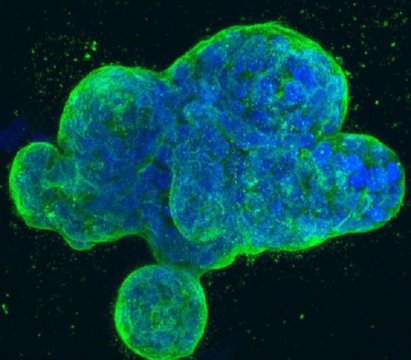
This is a three-dimensional culture of human breast cancer cells, with DNA stained blue and a protein in the cell surface membrane stained green. Credit: National Institutes of Health

Adenosine deaminases are a family of three enzymes encoded by the ADAR genes, which stand for adenosine deaminase acting on RNA. They regulate gene expression by modifying nucleotides within double stranded RNA molecules, serving as fundamental editors in the development of new stem cells.

The enzyme, however, is also activated in cancers as diverse as liver, breast and leukemia. A research team led by senior author Catriona Jamieson, MD, PhD, deputy director of the Sanford Stem Cell Clinical Center and deputy director of the UC San Diego Moores Cancer Center, found that the normal functions of the ADAR1 enzyme are hijacked by pre-malignant cells, leading to a cascade of molecular consequences that promote malignant transformation, dormant cancer stem cell generation and resistance to treatment.
"We were able to illuminate the abilities of ADAR1 to 'hyper-mutate' tumor suppressor RNAs in leukemia and, at the same time, edit the microRNA aimed at targeting the tumor suppressor RNA. This enzyme turns on cancer resistance via a domino effect on RNA instead of DNA," said Qingfei Jiang, PhD, Assistant Project Scientist, Jamieson's lab.
Jamieson characterized RNA editing as tweaking basic genetic blueprints, not fundamentally rewriting them. Nonetheless, the results might be dramatic. "One result of detection of malignant RNA editing could be exposing dormant cancer stem cells that often escape therapies that target dividing cells, which leads to therapeutic resistance and disease relapse, and also highlight ADAR as a potentially tractable target for cancer stem cell elimination," said Jamieson.
Researchers from different part of the world are invited to submit abstract on their unpublished latest research at our upcoming conference Cell Tissue Science 2019 which is focused on the complications and consequences of Stem CellRegenerative MedicineStem Cell TherapyCancer Cell Biology,Technical Advancements in cancer treatment and many more. We as committee members of the conference welcome you to be a part of the conference “ 12th World Congress on Cell & Tissue Science” in Singapore on March 11-12, 2019
You can submit your abstract on Session or Track : 09. Stem Cells Biology With Regards to Christmas and New Year Celebration we are providing a special discount of 30% on all Registration Categories for more information please  visit by Click Here

Thursday, 6 December 2018

Citrate-based biomaterial fuels bone healing with less rejection


A material based on a natural product of bones and citrus fruit, called citrate, provides the extra energy that stem cells need to form new bone tissue, according to a team of Penn State bioengineers. Their new understanding of the mechanism that allows citrate to aid in bone regeneration will help the researchers develop slow-release, biodegradable, citrate-releasing scaffolds to act as bone-growth templates to speed up healing in the body.
"In our lab, we have been working with citrate for over a decade," said Jian Yang, Professor of Biomedical Engineering, Penn State. "We knew that in the human body, 90 percent of organic citrate is located in skeletal tissue. But no one had really tried to use citrate as a building block to make bone biomaterials. Our new paper tries to understand how citrate helps in bone healing and uses the understanding to guide the design of new biomimetic biomaterials for better bone repair."
Autografting -- taking bone from another part of the patient's body and grafting it to the wound -- is the method used most for bone regeneration in a hospital setting. This is not always a suitable method, especially in the case of large wounds or bone tissue removed during cancer treatment.

Synthetic biomaterials would be a welcome replacement and many labs are working on developing them. But current synthetic materials cause significant inflammation, and the bone healing rate is slow and healing quality is poor. The body encapsulates the implant with fibrotic tissues that keep the implant from integrating with surrounding bone. With Yang's material, the researchers do not see encapsulation, and chronic inflammation is minimal.

Chuying Ma, a doctoral student in Yang's lab, is lead author on the paper. Ma was given the problem of uncovering the poorly known mechanism underlying the body's use of citrate to regenerate bone. She found that the stem cell membrane has a transporter that is used to transport citrate into the cell to elevate the cellular energy level. When the bone stem cells differentiate to make new bone cells, they require more energy as support for active bone formation. The timing and dosage of citrate supply to stem cells are also critical. Yang and Ma coined the newly identified citrate effect on stem cell differentiation as "metabonegenic regulation" in the paper.

The team also identified a second factor involved in energy production, an amino acid called phosphoserine. With their new understanding of the mechanism for bone regrowth, they developed a biomaterial incorporating both citrate and phosphoserine and tested it on rat models.
"Using our new material, we see the early deposition of new bone at one month," Ma said. "This is much earlier than the biomaterials widely used in FDA-approved devices. In this study we tested two models, the femoral condyle bone and cranial bone defects."
In both animal models we see the new biomaterial is better than the commercial materials in inducing early bone formation and also promoting bone maturation, according to Ma. "To me, this is an important finding," said Yang, who is a faculty member in Penn State's Materials Research Institute and the Huck Institutes of the Life Sciences. "Citrate is now recognized as a central linker between stem cell metabolism and differentiation. We are uncovering the mechanism whereby citrate influences stem cell activity, not only in bone, but by implication extending to other types of cells and tissues. For instance, there is a high concentration of citrate in the cerebrospinal fluid surrounding the brain. People can now use this understanding to start looking at citrate as a metabolism regulator to further regulate stem cells for other types of tissues and organs throughout the body."
We welcome researchers from different part of the to submit abstract on their latest research at our upcoming conference Cell Tissue Science 2019 which is mainly focuses on the complications the consequences of Stem CellRegenerative MedicineStem Cell TherapyCancer Cell Biology , Technical Advancements in cancer treatment and many more.We welcome you to the our upcoming conference “ 12th World Congress on Cell & Tissue Science” . 
You can submit your abstract on Session or Track : 10.Biomaterial and Bioengineering

Wednesday, 19 September 2018

Heart attack: Substitute muscle thanks to stem cells

Scientists from University of Würzburg  have for the first time succeeded in generating beating cardiac muscle cells from special stem cells. They may provide a new approach for the treatment of heart attacks.
Myocardial infarction -- commonly known as a heart attack -- is still one of the main causes of death. According to the Federal Statistical Office, more than 49,00 people died of its consequences. And yet the mortality after heart attack has greatly decreased over the past decades: As compared to the early 1990s, it has more than halved until 2015, according to the German Society of Cardiology (DGK). The reasons for this include better prevention, therapy and rehabilitation.
A heart attack leaves scars
The problem is during each heart attack, some of the cardiac muscle tissue dies which is accompanied by more or less marked scarring. Attempts made over the past years to substitute the destroyed tissue by adequately functioning cardiac muscle using stem cells have not been as successful as expected.
Recent results of research scientists at the University of Würzburg (JMU) now show a novel approach for the treatment of myocardial infarction. The team around Professor Süleyman Ergün, , focuses on a special type of stem cells that it has discovered in vascular walls.
Help from intracardiac blood vessels
"We could demonstrate for the first time the presence of special stem cells in human vascular walls that have the ability to develop into beating cardiac muscle cells under culture conditions," explains Professor Ergün, Head of the Institute of Anatomy and Cell Biology, University of Würzburg. The scientists could also show that these "vascular wall-resident stem cells" exist also in the walls of intracardiac blood vessels, the so-called "coronary vessels," and are actually activated to respond when a heart attack happens.
The problem so far was that in the event of an infarction these stem cells had no chance to develop into cardiac muscle cells as desired: "Our studies have shown that these cells are integrated into the scar tissue and thus lose their ability to transform into cardiac muscle cells," explains the scientist. Nevertheless the results give cause for hope: "Our results provide a new approach, in that it may be possible to therapeutically manipulate the behavior of the stem cells in the intracardiac vascular walls so that they are stimulated into regenerating the destroyed cardiac muscle tissue" says Dr. Ergün.
A novel therapy approach
Therapists are convinced that if a timely and therapeutically effective control of the newly discovered stem cells from the intracardiac blood vessels were actually possible, it would mean a huge step forward in the treatment of cardiovascular diseases. At the same time, it offers a chance to significantly reduce the therapeutic cost of these diseases. However, the scientists' findings are still limited to studies on experimental animals and in the lab. Further studies are therefore required to deepen the findings obtained before they can be used on humans.
 
We welcome researchers from different part of the to submit abstract on their latest research at our upcoming conference Cell Tissue Science 2019 which is mainly focuses on the complications the consequences of Stem CellRegenerative MedicineStem Cell TherapyCancer Cell Biology , Technical Advancements in cancer treatment and many more.We welcome you to the our upcoming conference “ 12th World Congress on Cell & Tissue Science” . For more info visit :Cell Tissue Science 2019