Showing posts with label National Institutes of Health. Show all posts

Friday, 4 January 2019

An errant editing enzyme promotes tumor suppressor loss and leukemia propagation


Issue of Cancer Cell, researchers at University of California San Diego School of Medicine report that detection of "copy editing" by a stem cell enzyme called ADAR1, which is active in more than 20 tumor types, may provide a kind of molecular radar for early detection of malignancies and represent a new therapeutic target for preventing cancer cell resistance to chemotherapy and radiation.
190103133648_1_540x360
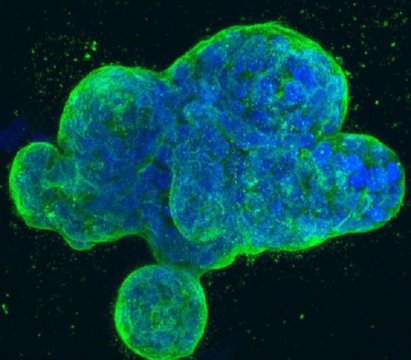
This is a three-dimensional culture of human breast cancer cells, with DNA stained blue and a protein in the cell surface membrane stained green. Credit: National Institutes of Health

Adenosine deaminases are a family of three enzymes encoded by the ADAR genes, which stand for adenosine deaminase acting on RNA. They regulate gene expression by modifying nucleotides within double stranded RNA molecules, serving as fundamental editors in the development of new stem cells.

The enzyme, however, is also activated in cancers as diverse as liver, breast and leukemia. A research team led by senior author Catriona Jamieson, MD, PhD, deputy director of the Sanford Stem Cell Clinical Center and deputy director of the UC San Diego Moores Cancer Center, found that the normal functions of the ADAR1 enzyme are hijacked by pre-malignant cells, leading to a cascade of molecular consequences that promote malignant transformation, dormant cancer stem cell generation and resistance to treatment.
"We were able to illuminate the abilities of ADAR1 to 'hyper-mutate' tumor suppressor RNAs in leukemia and, at the same time, edit the microRNA aimed at targeting the tumor suppressor RNA. This enzyme turns on cancer resistance via a domino effect on RNA instead of DNA," said Qingfei Jiang, PhD, Assistant Project Scientist, Jamieson's lab.
Jamieson characterized RNA editing as tweaking basic genetic blueprints, not fundamentally rewriting them. Nonetheless, the results might be dramatic. "One result of detection of malignant RNA editing could be exposing dormant cancer stem cells that often escape therapies that target dividing cells, which leads to therapeutic resistance and disease relapse, and also highlight ADAR as a potentially tractable target for cancer stem cell elimination," said Jamieson.
Researchers from different part of the world are invited to submit abstract on their unpublished latest research at our upcoming conference Cell Tissue Science 2019 which is focused on the complications and consequences of Stem CellRegenerative MedicineStem Cell TherapyCancer Cell Biology,Technical Advancements in cancer treatment and many more. We as committee members of the conference welcome you to be a part of the conference “ 12th World Congress on Cell & Tissue Science” in Singapore on March 11-12, 2019
You can submit your abstract on Session or Track : 09. Stem Cells Biology With Regards to Christmas and New Year Celebration we are providing a special discount of 30% on all Registration Categories for more information please  visit by Click Here

Thursday, 13 December 2018

Unlocking the secrets of how cells communicate offers insights into treating diseases


2D images, left, and the 3D structure, right, of the gap junction communication channel from the eye lens, resolved to near-atomic resolution by the Reichow Lab using cryo-electron microscopy.
Credit: Reichow Lab | Portland State University
Portland State University researchers have made a significant breakthrough by developing the 3-D structure of proteins from inside the eye lens that control how cells communicate with each other, which could open the door to treating diseases such as cataracts, stroke and cancer.

The PSU research team, led by chemistry professor Steve Reichow, used a multimillion-dollar microscope and a novel technique developed by three Nobel Prize-winning biophysicists called cryo-electron microscopy (Cryo-EM) to view membrane protein channels or transportation tunnels in cell walls -- at the atomic level. This allowed Reichow's team, whose research is supported by the National Institutes of Health, to create a 3-D image of the membrane channel to better understand the processes involved in cell-to-cell communication.

Portland State researchers used Cryo-EM a microscope technique that freezes biomolecules in mid-movement and takes ultra-high-resolution images and computer modeling to see the 3-D structure of gap junction proteins that had been isolated from eye lenses. Gap junctions are tiny channels that allow neighboring cells to communicate with one another and are found in many places throughout the body.

Their findings published in the scientific Journal Nature -- showed for the first time how gap junctions selectively pass or block chemical information. Until now, it was not known how these channels would allow certain messages to pass between cells while specifically blocking others.

Reichow said the detailed images may open the door to understanding, and potentially treating, different types of diseases that are associated with the loss of function in cellular communication involving gap junctions such as cataracts, cardiac arrhythmia, stroke and certain cancers.
"Currently there's no drug on the market today that can specifically block or activate gap junction proteins," Reichow said. "But our discovery may one day pave the way for development of pharmaceuticals that can control heart disease or other diseases that are associated with the malfunctions or mis-regulations of these protein channels."
Now that the Reichow Lab has established a method for characterizing the proteins, they are trying to understand the nuances of how the body uses gap junctions differently across tissues and organs.
We welcome researchers from different part of the to submit abstract on their latest research at our upcoming conference Cell Tissue Science 2019 which is mainly focuses on the complications the consequences of Stem CellRegenerative MedicineStem Cell TherapyCancer Cell Biology , Technical Advancements in cancer treatment and many more.We welcome you to the our upcoming conference “ 12th World Congress on Cell & Tissue Science” . 
You can submit your abstract on Session or Track : 09. Stem Cells and its Applications